Aramco expands oil rerouting around the Strait of Hormuz; effect will take years to materialise
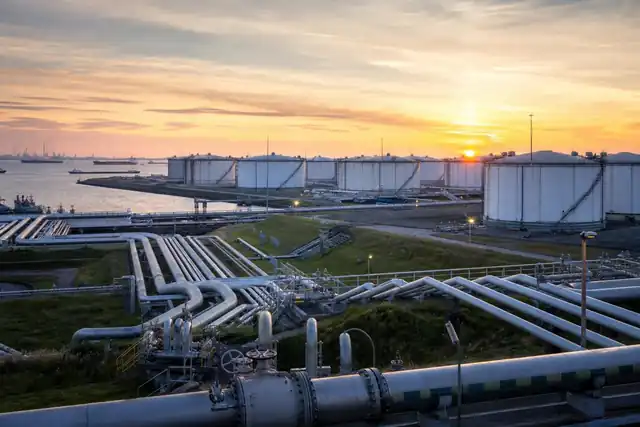
Saudi Aramco has begun work on an expansion of the East-West pipeline (Petroline) from 7 to 10 million barrels per day, NU.nl reports, citing a single source. CEO Amin Nasser confirmed during the company's earnings call on 3 November that preliminary engineering for the expansion is already underway, Asharq Al-Awsat reports. The expansion is meant to reduce the oil market's dependence on the Strait of Hormuz, where flows have been curtailed sharply since the regional conflict, and so also affects the Brent price paid by European refiners.
Fortune already reported on 23 October 2026 on the 10-million-barrel-per-day target, and Asharq Al-Awsat quoted Nasser on 3 November saying preliminary engineering is underway for the pipeline expansion. Both outlets confirm the broader expansion plans and that engineering work has started, but NU.nl's specific claim that physical work on the line itself is already underway is not corroborated elsewhere and remains attributed to that single source. Before the conflict, the Petroline carried around 2 million barrels per day from Abqaiq to the Red Sea port of Yanbu; by late March 2026 the line had reached its full capacity of 7 million barrels per day, of which 2 million barrels were earmarked for domestic refining. Saudi Arabia's energy minister said in early October 2026 that the additional 3 million barrels per day would take two to three years to materialise.
That timeline tempers any near-term effect, and the line remains exposed. Its vulnerability showed repeatedly this year: an attack on a pumping station cut throughput by 700,000 barrels per day on 9 April 2026, a strike on 10 September 2026 forced a shutdown that lasted until 22 September 2026, and a pumping station near Khurais was hit again on 4 October 2026, though oil reportedly kept flowing, according to Bloomberg. Houthi forces took control of the area around Bab al-Mandab, the southern passage from Yanbu, in September 2026, adding a second point of exposure to the route. A full increase to 10 million barrels would add around 2% to global oil supply, MIT economist Gilbert Metcalf told Fortune, calling the resulting price effect limited.
For the Brent price paid by European refiners, underlying scarcity remains the dominant factor. Brent settled at $103.60 a barrel on 3 November, against $104.77 on 2 November, a decline of 1.12%, and almost 12% below the peak of $117.64 reached on 30 October. Oil exports via Hormuz averaged just under 9 million barrels per day in September 2026, around 44% of February's level, Fortune reports, citing Kpler data. The pullback since late October appears linked more to Ukrainian strikes on Russian refineries and rising North American output than to the Aramco news. Given the minister's two-to-three-year timeline for the expansion and the repeated attacks on the pipeline this year, the risk premium tied to Gulf supply disruptions is likely to stay embedded in the Brent price until the additional capacity is actually in service.
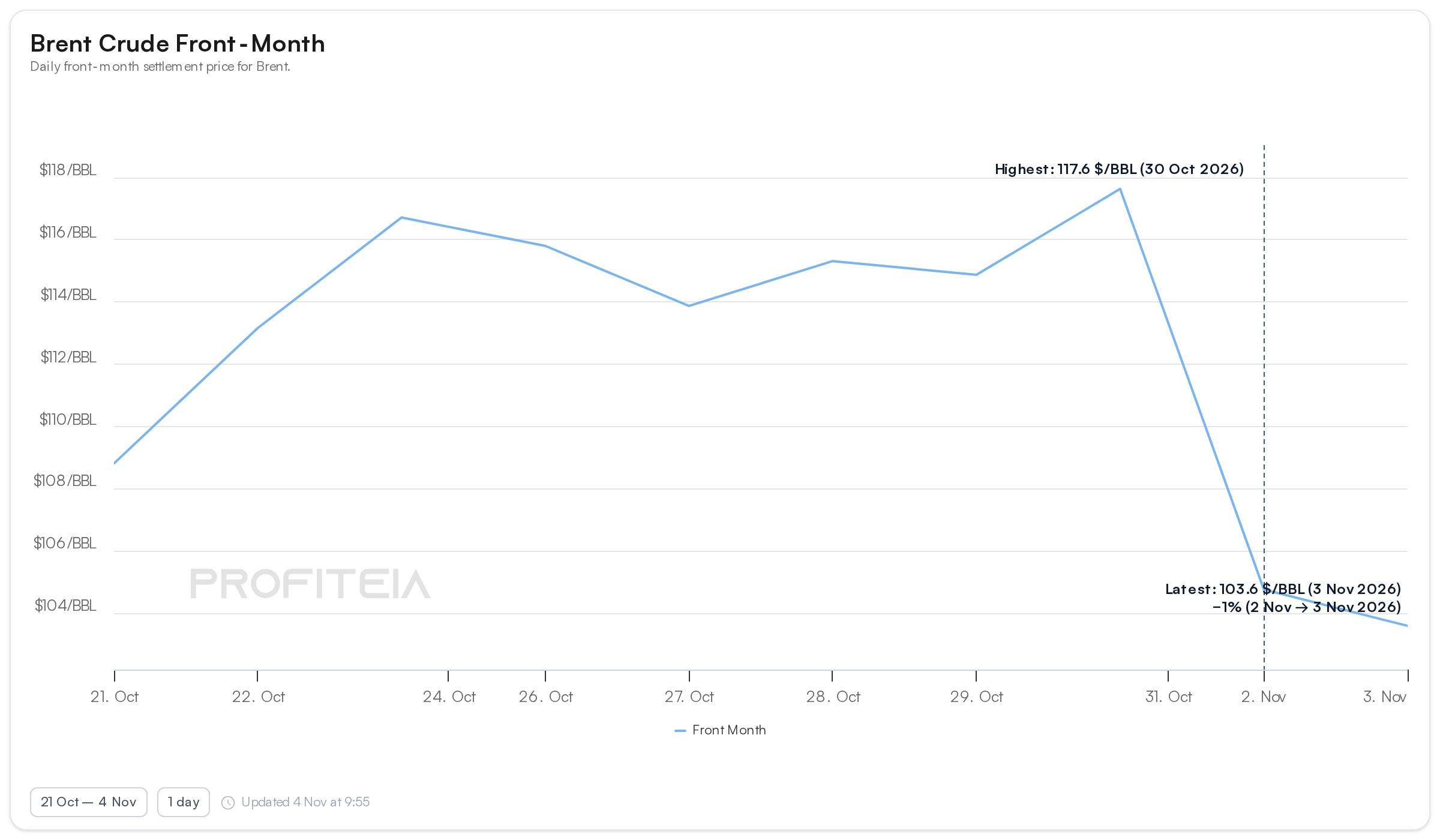
Front-month Brent crude, daily settlement price
Chart as published
Outlook
The near-term path for Brent depends less on pipeline capacity than on whether Hormuz flows and Russian refinery output recover; a renewed attack on the Petroline or further Houthi action near Bab al-Mandab would be the clearest signal that the risk premium is widening again.
Frequently asked questions
- What is the East-West pipeline (Petroline)?
- The Petroline runs from the Abqaiq oilfield near the Persian Gulf to the Red Sea port of Yanbu, allowing Saudi Arabia to export oil without passing through the Strait of Hormuz.
- Why is the Strait of Hormuz now operating well below capacity?
- Since the regional conflict, passage through Hormuz has been heavily restricted; oil exports via the strait stood at around 44% of February's level in September 2026, Fortune reports, citing Kpler data.
Sources
News
- 1NU.nl · Nov 3, 2026 · nu.nlSaoedische pijplijn die Straat van Hormuz moet omzeilen wordt uitgebreid
- 2fortune.com · fortune.comSaudi Arabia wants to send 10 million barrels of oil a day around Hormuz. A former Treasury official says it may barely move prices | Fortune
- 3english.aawsat.com · english.aawsat.comAramco Begins East-West Pipeline Expansion to Boost Oil Export Flexibility
Data
- Brent Crude FuturesICE