Connecting energy and data
Flexibility and Batteries
Flexibility is the ability to adjust generation, consumption or storage. Batteries shift energy through time within power, storage and network limits. Economic outcomes depend on prices, losses, costs and market access.
Updated 22 October 2026
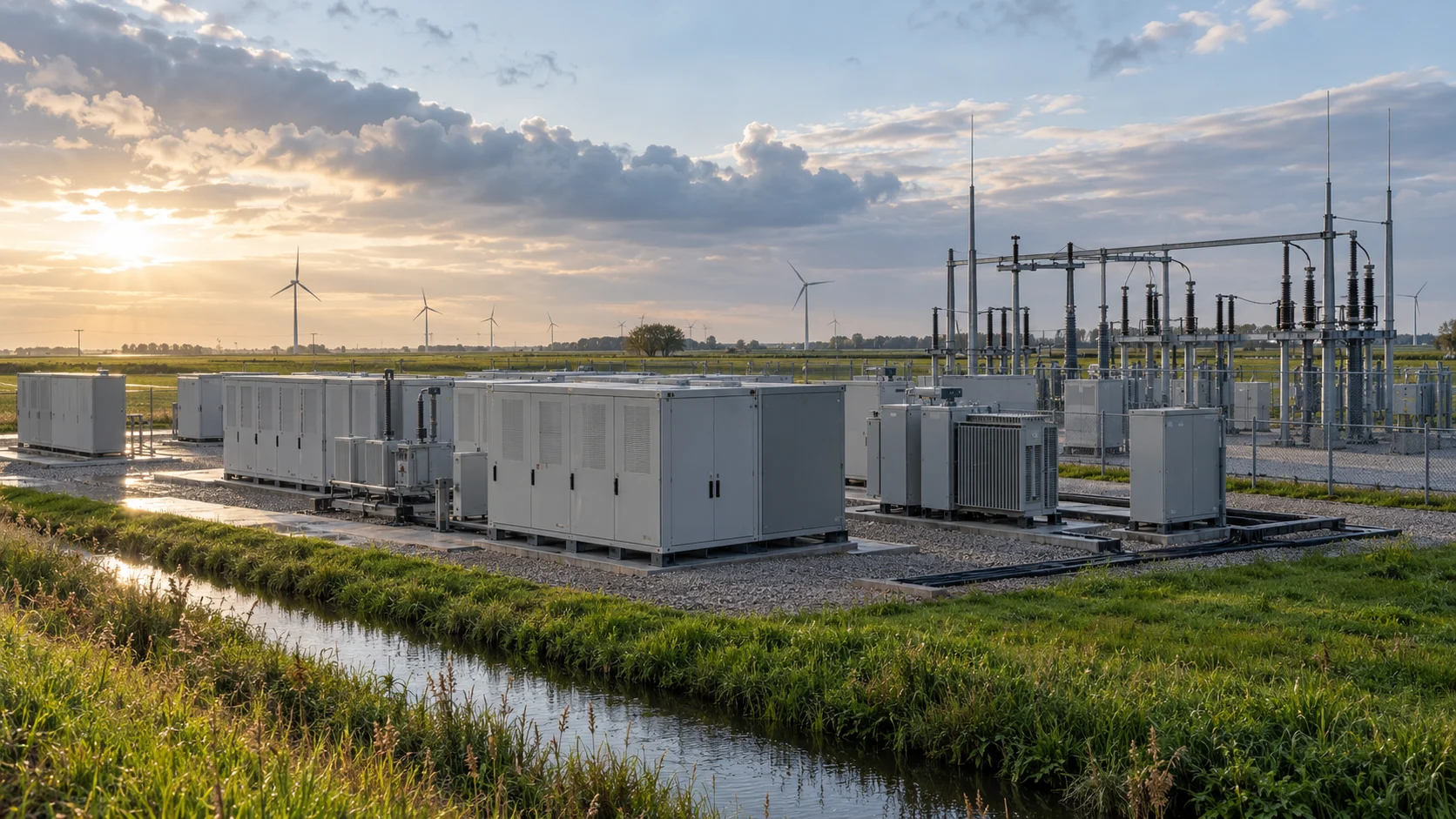
Why is flexibility important for the energy system? With the increase of renewable generation (such as sun and wind), the electricity system becomes less predictable. Flexibility helps absorb fluctuations and reduce grid congestion. This keeps the grid stable and affordable. TenneT and regional grid operators therefore encourage flexibility with compensation.
What are common forms of flexibility? Examples include battery storage, demand response, heat buffers, emergency generators, CHP installations and smart charging strategies for EVs. Also temporarily halting production or adjusting cooling/freezing installations is used. What works depends on your business profile.
How can I monetise my flexibility? Through participation in balancing markets (FCR, aFRR, mFRR), utilising imbalance prices or offering capacities in congestion management. This can be direct or via aggregators. With smart software you can respond to price signals and generate income with flexible capacity.
How do I determine the value of my flexibility? Value is determined by market prices, deployment options and technical parameters such as response time and duration. Simulations and business cases help map revenues and costs of flexibility deployment. For batteries, degradation also plays a role.
How does flexibility work in combination with a battery? A battery can switch very quickly and both charge and discharge. This makes it an ideal form of flexibility. You can trade in multiple markets simultaneously: balancing market, imbalance, self-consumption and peak shaving. Coordination between software, BRP and system operator is essential.
How do I optimise my battery for multiple markets at once? Use algorithms that combine real-time market data, weather forecasts and battery status. By setting priorities (e.g. FCR over imbalance), you maximise revenue. Aggregators or EMS providers often offer this smart optimisation logic.
What are the technical requirements for deploying flexibility? A metering setup with quarter-hour data, a communication interface, real-time control and registration with the correct market party (BRP, BSP, CSP). For some markets, test certificates and availability guarantees are required. The requirements differ per market.
What risks do I face when deploying flexibility? For example, imbalance costs if you control incorrectly, market risks due to price fluctuations, or loss of income during technical failures. There is also degradation risk with batteries. Good monitoring, maintenance and contract agreements help manage these risks.
How do I build an integrated flexibility strategy? First establish power, storage, network and operational constraints. Then compare market conditions, costs and scenarios. Distinguish historical results, forecasts and executable strategies; a positive calculation does not guarantee a return.
Always the first energy insight
Subscribe to our newsletter and receive current market information, smart insights, and updates about our platform. Short, relevant, and directly applicable.
Top-Bottom Spreads TB-spreads – the difference between peak and off-peak prices on the energy market – are rapidly evolving from niche indicators to indispensable control variables… Read more →
Imbalance In the dynamic energy market, imbalance is the playing field for profit and risk. Profiteia offers real-time, validated insights and smart forecasts… Read more →
Flexibility and batteries Flexibility is the key to profit in an energy market full of sun, wind and data. Profiteia helps you with real-time insights… Read more →
Sources and terminology
Check the source and the conditions for the relevant country and market product.
Connecting energy and data
Experience Profiteia yourself.
Discover which data and tools support your work. Try the demos.