Connecting energy and data
Balancing Markets
Balancing markets help system operators keep generation and demand in balance. Distinguish reserve capacity kept available from energy actually activated. FCR, aFRR and mFRR have different functions and participation requirements.
Updated 22 October 2026
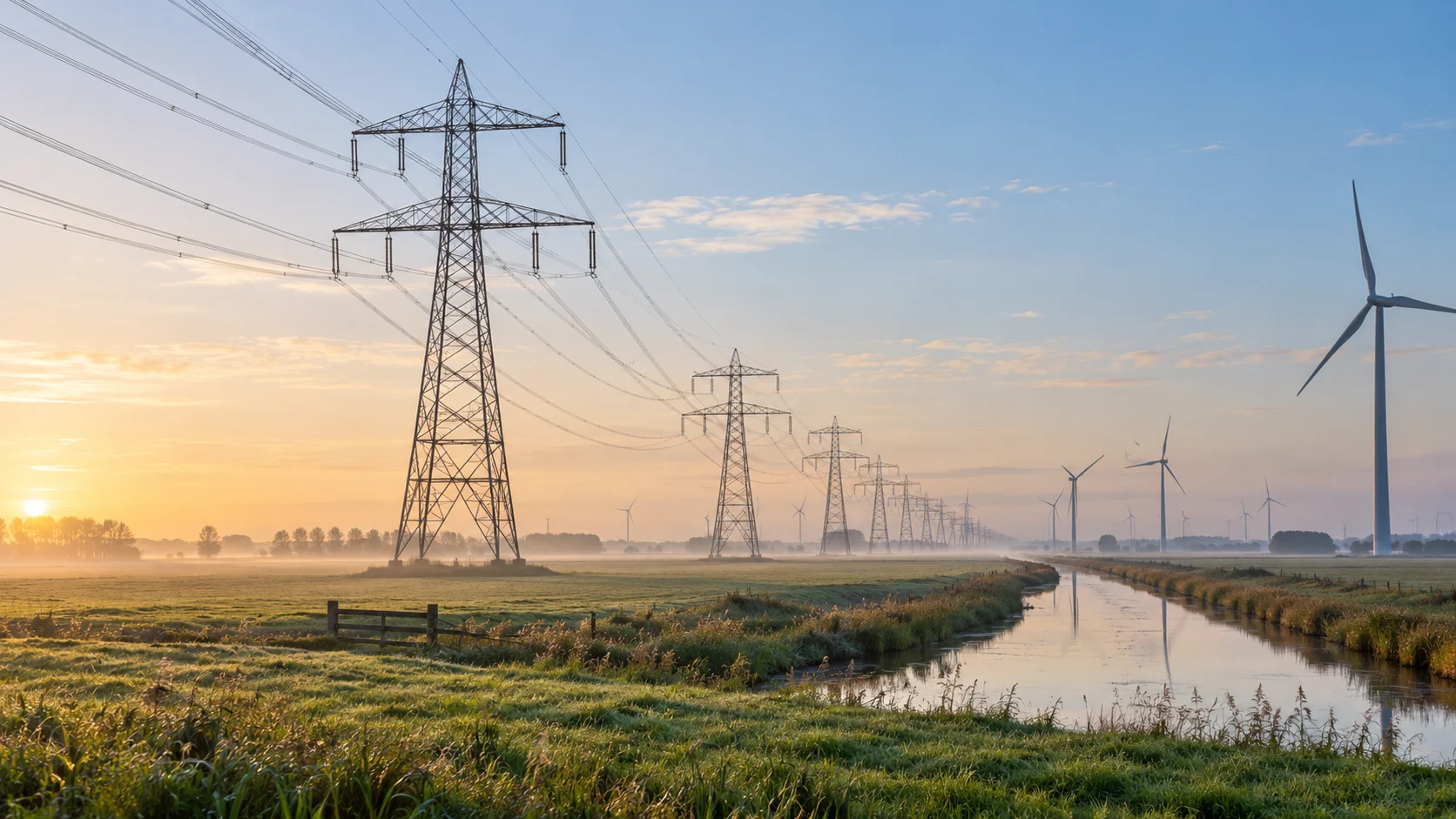
1. What are balancing markets? Balancing markets are markets where TenneT purchases capacity to keep the electricity grid balanced in real-time. Producers or consumers with controllable capacity provide flexibility here for compensation. It involves fast, reliable delivery of additional or reduced power.
2. What is the difference between FCR, aFRR and mFRR?
FCR (Frequency Containment Reserve): primary reserve, activated within seconds.
aFRR (automatic Frequency Restoration Reserve): automatic, secondary reserve within 5 minutes.
mFRR (manual Frequency Restoration Reserve): manually deployable tertiary reserve within 15 minutes. Each has different requirements and compensation structures.
3. Who can participate in balancing markets? Participants must be recognised as BSP (Balancing Service Provider) or collaborate with a BSP. Both energy companies and companies with batteries, CHP, cold/heat storage or other flexibility can participate. Certification and minimum capacities apply per market.
4. How does pricing work on these markets? Compensation consists of a capacity fee (for availability) and an activation fee (per MWh of activated capacity). These are determined via auctions, where the lowest bids get priority. Prices can fluctuate strongly during scarcity.
5. What are the technical requirements for participation in FCR? For FCR, an installation must automatically respond to frequency changes within 30 seconds. Continuous availability, accurate measurement equipment and a data connection with TenneT are also required. Validation tests are part of the admission process.
6. How does the activation strategy differ between FCR, aFRR and mFRR? FCR requires continuous availability, aFRR demands short response time and precision, mFRR offers more time and flexibility. FCR is suitable for batteries, aFRR for hybrid systems, mFRR often for larger installations or heat networks. Combinations are possible via portfolio management.
7. Can I participate as a small company via an aggregator? Yes. Aggregators bundle flexibility from multiple parties to meet minimum thresholds. They arrange market access, IT infrastructure and coordination with TenneT. This lowers the barrier for SMEs or cooperatives.
8. How do I calculate the revenue from participation? Create a business case based on the number of activation hours, capacity fee, activation fee, operational costs and possible degradation (for batteries). Use historical market data and simulate different scenarios for profitability estimation.
9. What risks are involved in participating in balancing markets? Technical failures, underperformance during activation, price fluctuations and lack of activation can affect income. Tight monitoring, good maintenance and a solid contract with the aggregator or as BSP are crucial for risk mitigation.
10. How do I build a strategic portfolio for balancing markets? Inventory your assets, split capacities by market segments (FCR, aFRR, mFRR), optimise activation via smart software and bid via BSP or aggregator. Combine with imbalance and intraday strategies for maximum value creation. Stay up-to-date with market developments and technical innovations.
Deploy your assets optimally for system stability and financial benefit.
Always the first energy insight
Subscribe to our newsletter and receive current market information, smart insights, and updates about our platform. Short, relevant, and directly applicable.
Top-Bottom Spreads TB-spreads – the difference between peak and off-peak prices on the energy market – are rapidly evolving from niche indicators to indispensable control variables… Read more →
Imbalance In the dynamic energy market, imbalance is the playing field for profit and risk. Profiteia offers real-time, validated insights and smart forecasts… Read more →
Flexibility and batteries Flexibility is the key to profit in an energy market full of sun, wind and data. Profiteia helps you with real-time insights… Read more →
Sources and terminology
Check the source and the conditions for the relevant country and market product.
Connecting energy and data
Experience Profiteia yourself.
Discover which data and tools support your work. Try the demos.