Connecting energy and data
Congestion
Grid congestion occurs when requested electricity transfers exceed available network capacity. It is specific to a location and time. Congestion management and energy prices serve different purposes; a low energy price does not guarantee spare network capacity.
Updated 22 October 2026
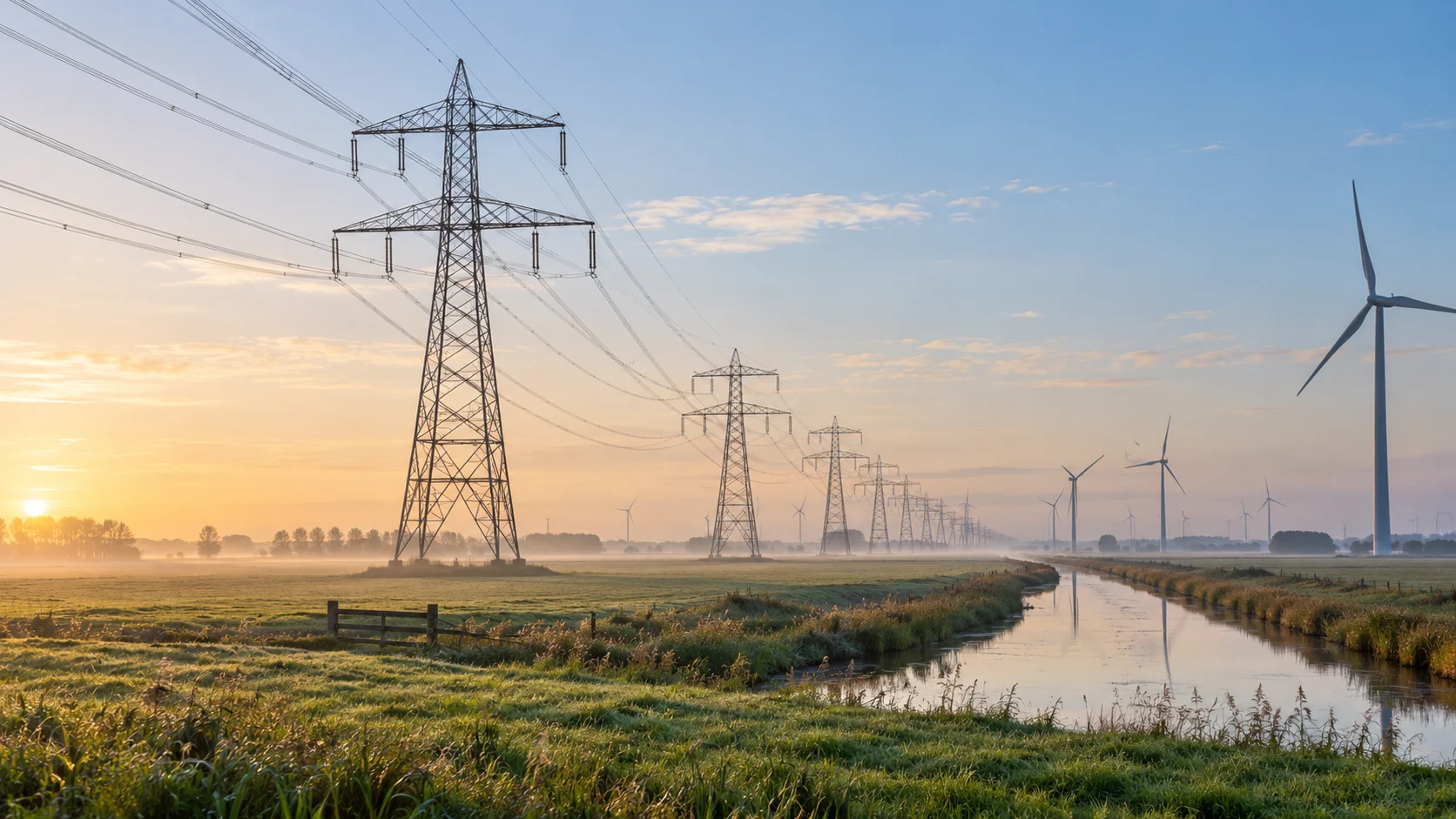
2. Where does congestion mainly occur in the Netherlands? Congestion mainly occurs in areas with many solar parks, wind turbines or industrial users. Examples include parts of North Brabant, Flevoland and Groningen. Grid operators publish current congestion maps showing where restrictions apply.
3. What does congestion mean for my company? During congestion, you may not receive a new connection or may not be allowed to produce or consume at full capacity. This impacts your operations, business case or investment decisions. It can also cause delays in sustainability plans.
4. What is congestion management? Congestion management is a tool used by grid operators to temporarily free up extra capacity by controlling flexible power. Market parties can then consume or feed in electricity on request of the grid operator, against compensation, so the grid does not become overloaded.
5. How can I participate in congestion management? You can participate via your BRP or through a recognised Congestion Service Provider (CSP). For this, you must be able to control installations within agreed time windows. Participation is increasingly mandatory for large consumers with connections of 1 MW or more.
6. What are the financial benefits of congestion management? Compensation usually consists of an availability fee and an activation fee. This can amount to tens of euros per MWh depending on the congestion level and location. For flexible users, this is an attractive additional income source.
7. What role do batteries play in solving congestion? Batteries can locally store surplus electricity and deploy it later. They help absorb peaks and spread grid load. In congestion areas, batteries are becoming increasingly important, provided they are well integrated into the EMS and market structures.
8. What is the congestion management services code decision? Since August 2023, this decision requires companies with large connections (≥1 MW) in congestion areas to participate in congestion management. You must then make flexibility available to the grid operator. This strengthens control over grid capacity.
9. Can I collaborate with other companies against congestion? Yes, through energy hubs or local energy communities you can bundle flexibility. By jointly reducing peaks, more opportunities arise for new connections and utilisation of sustainable generation. This requires cooperation and data exchange.
10. How do I strategically anticipate congestion in my region? Conduct a capacity analysis of your connection, check grid operators’ congestion maps and inventory your flexibility. Consider investing in batteries or CHP. Seek cooperation with local parties and register with a CSP. By acting proactively, you retain control over your grid usage and investment space.
Always the first energy insight
Subscribe to our newsletter and receive current market information, smart insights, and updates about our platform. Short, relevant, and directly applicable.
Top-Bottom Spreads TB-spreads – the difference between peak and off-peak prices on the energy market – are rapidly evolving from niche indicators to indispensable control variables… Read more →
Imbalance In the dynamic energy market, imbalance is the playing field for profit and risk. Profiteia offers real-time, validated insights and smart forecasts… Read more →
Flexibility and batteries Flexibility is the key to profit in an energy market full of sun, wind and data. Profiteia helps you with real-time insights… Read more →
Sources and terminology
Check the source and the conditions for the relevant country and market product.
Connecting energy and data
Experience Profiteia yourself.
Discover which data and tools support your work. Try the demos.